Behind the Headset: My Candid, Quirky Dive Into AI Call & Chat Assistants (No Code Required!)
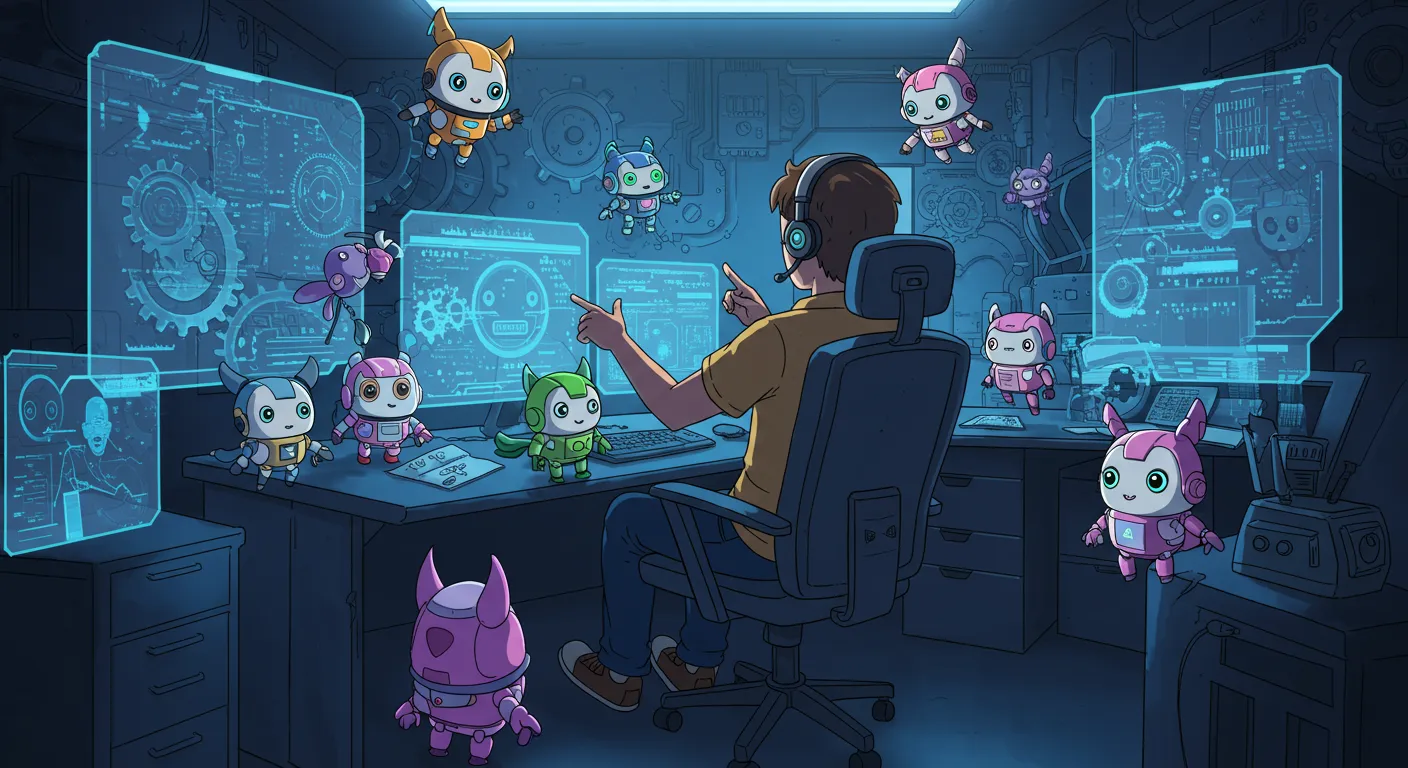
Maybe it was the third cold call in one morning, or perhaps my eternal struggle with rescheduling dentist appointments, but I started dreaming about a world where AI could pick up the grunt work and let humans focus on what matters. Fast-forward to today, and it’s not just a dream—AI call and chat assistants are everywhere, orchestrating customer journeys, booking meetings, and (in theory) never getting tired of saying "How can I help you today?" If you’ve dabbled in GoHighLevel, white-label SaaS, or just wish chatbots felt a little more like actual co-workers, join me as I tumble down the rabbit hole of modern AI contact centers, white-labeling, and—spoiler alert—billing your clients for every AI voice minute.
The Marvels (and Mishaps) of No-Code AI Assistants
If you had told me a year ago that I’d be running my business with a team of AI Call Assistants and AI Chat Assistants—without writing a single line of code—I’d have laughed. Loudly. Yet here I am, knee-deep in the world of no-code AI, where workflow automation is less about headaches and more about “how much coffee can I drink while bots do my work?”
Let’s start with the marvels. The process is so simple, it almost feels like cheating. You connect your GoHighLevel account, configure a few settings, and—voilà—your business suddenly has its own AI-powered team. No complex webhooks, no Zapier gymnastics, and, most importantly, no prompt engineering. The AI figures out what to say, how to say it, and even adapts to your industry or sales playbook with just a one-line instruction. Research shows that no-code AI assistant deployment is becoming the norm, allowing agencies and businesses to implement Conversational AI Platforms in minutes, not months.
One of my favorite features? The AI writes its own prompts. Seriously. Whether it’s a sales script, appointment reminder, or customer support reply, the assistant generates context-aware responses on the fly. I used to spend hours crafting the “perfect” prompt. Now, the AI often does it better—and faster—than I ever could. It’s a genuine timesaver for non-coders and a game-changer for anyone who’s ever felt overwhelmed by the technical side of automation.
Of course, it’s not all smooth sailing. There was the day I let an AI assistant handle my entire sales pipeline. I watched, coffee in hand, as it booked meetings mid-conversation, updated CRM records, and followed up with leads—all while I tried (and failed) not to hover nervously over the dashboard. Did it cry? No. Did I? Almost. There’s a strange mix of joy and anxiety in watching bots do what used to take a small army of humans. But the results speak for themselves: instant lead engagement, 24/7 pipeline management, and a noticeable drop in admin work.
What really sets these AI Call Assistants and AI Chat Assistants apart is their adaptability. They can converse in multiple languages (English, Spanish, German, French, Chinese, Hindi, and more), work across channels like SMS, Instagram DMs, Facebook Messenger, WhatsApp, and email, and even transfer live calls to human agents when needed. And with white-label options, you can brand the entire experience as your own—right down to the dashboard and domain.
As Marc Andreessen once said,
“Software is eating the world. Now, AI assistants are helping it finish dessert.”
It’s true. The rise of no-code AI, prompt automation, and instant deployment is reshaping how agencies and businesses approach customer engagement. These quirky, tireless digital teammates don’t steal the last donut, but they might just revolutionize your workflow.
White Label Everything: Brand Power Unleashed
Let’s talk about the not-so-secret weapon that’s quietly transforming agencies and SaaS businesses: White Label AI. If you’ve ever wondered how some agencies seem to build instant trust with clients—and somehow squeeze out better margins—here’s the inside scoop. It’s all about making AI call assistants and chat assistants look and feel like they’re part of your client’s brand from day one.
Branding AI: Trust, Loyalty, and a Dash of Magic
There’s something almost magical about seeing your brand colors, logo, and custom domain on a slick AI dashboard. It’s not just for show. Research shows that branded experiences foster deeper client trust and loyalty. As Sarah Frier puts it:
"The magic of white-labeling is making your clients feel safe with something entirely new."
With Assistants AI, you can white label everything—dashboards, chat windows, even the outbound call experience. No coding required, no complex workflows. Just your branding, everywhere it matters.
- Custom domains and logo integration on every plan
- Use your own OpenAI API key and Twilio number for full control
- Unlimited AI assistants, ready to deploy in 1, 3, 10, or unlimited sub-accounts
The Real Economics: Rebilling Voice Minutes
Here’s where things get interesting for agencies. Every AI voice minute is billed at just $0.07 per minute (down to the second). But with built-in rebilling, you can mark up those minutes and create a recurring, scalable revenue stream. Agencies are loving this model—it’s simple, transparent, and adds a healthy margin without extra effort.
I’ve seen agencies package AI Voice Telecom services as premium add-ons, charging clients a flat rate or per-minute markup. The result? Predictable monthly income and a service clients can’t easily replicate on their own.
Wild Card: If AI Bots Wore Company T-Shirts…
Would morale improve if your AI call assistants and chat assistants could wear virtual company t-shirts? Okay, maybe not literally, but the analogy holds. When your AI feels like part of the team—branded, consistent, and always on-message—clients treat it as a trusted extension of their business.
My Experiment: The Branded AI Assistant Test
I ran a little experiment. I customized my AI assistant with our agency’s logo, colors, and a branded chat widget. Then I let it handle inbound chats and calls for a week. The feedback? Clients barely noticed it was AI. They assumed it was a seasoned support pro—because the experience felt so familiar and on-brand.
That’s the power of white label AI. It’s not just about cosmetics; it’s about building equity, trust, and a seamless client journey. And with no-code deployment, even agencies without technical teams can launch branded AI call and chat assistants in minutes.
White label AI isn’t just a trend—it’s a new standard for agencies looking to scale, differentiate, and own their client relationships from end to end.
Multilingual, Multi-Channel, Limitless: Where AI Assistants Really Shine
The first time I heard an AI Chat Assistant respond in French, I had to pause. This wasn’t the stiff, phrasebook French I remembered from high school. It was fluid, natural, and—dare I say—charming. That moment was a turning point for me in understanding just how far Multilingual AI Chat technology has come. Today, leading Conversational AI Platforms don’t just dabble in a handful of languages; they’re fluent in English, German, Japanese, Spanish, French, Portuguese, Hindi, Chinese, and more. And it’s not just about language. It’s about context, nuance, and the ability to switch seamlessly between channels and conversations.
Let’s talk about multichannel mastery. These AI Call Assistants aren’t limited to one inbox or a single app. They leap from SMS to Instagram DMs, from WhatsApp to Facebook Messenger, and even to live chat and email—like digital acrobats. Each channel is a new opportunity to connect, and these assistants don’t miss a beat. I’ve watched as a single AI assistant managed inbound WhatsApp queries, followed up via SMS, and sent a confirmation email—all within minutes, all in the customer’s preferred language.
This is more than just convenience. It’s a revolution in AI Business Communications. Research shows that multilingual AI chat capabilities are now a standard feature in top-tier platforms, enabling businesses to engage global customers overnight. Imagine launching a campaign and instantly being able to support leads in Tokyo, Berlin, and São Paulo—no extra hires, no language barriers, just pure scalability.
What’s even more impressive is how these AI Chat Assistants integrate with CRM systems. Appointment booking, contact updates, and follow-ups are handled conversationally, with zero coding required. No more tangled workflows or endless Zapier chains. With just a few clicks, I connected my AI assistant to my CRM, and suddenly, every lead was nurtured, every appointment was booked, and every follow-up was on time. It’s the kind of automation that doesn’t just save time—it changes the way you think about scaling a business.
And here’s a wild thought: imagine a room full of AI assistants negotiating in seven languages at once. It sounds chaotic, but it’s also a glimpse into the future of Conversational AI Platforms. The ability to adapt to any sales motion, in any language, across any channel, is no longer a pipe dream. It’s happening right now. As Sundar Pichai put it,
"Our aim is to speak your customer's language—literally and figuratively."
The practical side? Voice and chat AI assistants are available 24/7, with voice calls billed by the second and unlimited assistants ready to deploy. Whether it’s rebilling voice minutes to clients or white-labeling the entire experience, the flexibility is unmatched. And the best part—no code required. Just plug, play, and watch your business conversations become truly limitless.
Pricing, Perks, and the Odd Economics of Automated Conversations
Let’s talk numbers—because in the world of AI Voice Assistants and chatbots, the economics are, frankly, a little quirky. When I first saw the $0.07 per minute price tag for AI voice calls, I had to pause. Seven cents a minute, billed per second, for a robot to talk to your leads or customers? It’s a far cry from the days of payphones and long-distance charges, but in its own way, it’s revolutionizing AI Chatbot Pricing and business models across industries.
Here’s the quick breakdown: Assistants AI offers four main subscription plans—Solo at $97/month, Starter at $197/month, Growth at $397/month, and Unlimited at $697/month. Each plan comes with unlimited AI assistants (yes, you read that right), and every plan supports multi-channel communication: voice, SMS, Insta DMs, Facebook Messenger, WhatsApp, live chat, and email. The real kicker? Voice minutes are charged at $0.07 each, with billing down to the second. For agencies, there’s even a built-in rebilling feature, so you can upcharge clients for every AI voice minute used. It’s a usage-based pricing model that’s granular, flexible, and—if you’re running high call volumes—potentially lucrative.
What do you actually get at each price point? Beyond unlimited assistants, you unlock features like white-label dashboards, custom branding, and the ability to bring your own OpenAI API key or Twilio number. There are also perks like private community access, free AI snapshots, and custom ChatGPT assistants. The Unlimited plan, as the name suggests, removes all sub-account limits and is designed for agencies or enterprises with big ambitions.
But don’t let the simplicity fool you. The real key cost factors start to emerge when you look at advanced features. Natural language processing (NLP), sentiment analysis, and voice interface customization can push development costs well into the $15,000–$100,000+ range. Integration with existing systems? That can add another 20–50% to your budget. And don’t forget ongoing maintenance—expect to spend $1,000–$5,000 per year just to keep things running smoothly. Research shows that in 2025, AI chatbot costs can range from $5,000 for a basic setup to over $1 million for complex, enterprise-grade solutions. It’s a spectrum, and where you land depends on your appetite for features and scale.
Sometimes, the efficiency of these AI Voice Telecom solutions is so uncanny, I catch myself wondering if I’m automating my own job out of existence. The assistants handle appointment booking, follow-ups, CRM updates, and even live call transfers—no coding, no prompt engineering, just a few clicks. It’s both thrilling and, if I’m honest, a little unsettling.
'If you're not paying for the product, you are the product. But with AI voice minutes, you are very much paying—for every second.' - Benedict Evans
So, the next time you hear a perfectly pleasant robot book your dental appointment, remember: every second is ticking, and every tick is a tiny charge. Welcome to the new economics of automated conversations.
The Human Touch: When to Let AI Work, and When to Step In
If there’s one thing I’ve learned from my deep dive into AI Call Assistants and AI Chat Assistants, it’s this: even the smartest Intelligent Virtual Agents can’t (and shouldn’t) do it all. There are moments—those subtle, sometimes unpredictable human moments—when only a real person will do. No matter how advanced your AI Assistant, there’s a line between automation and empathy that technology can’t cross.
I’ve seen firsthand how today’s AI Contact Center solutions blend automation and human touch. For example, with Assistants AI, live call transfers are built right in at every plan level. This means when the AI senses a conversation has reached its limit—maybe the customer is confused, or the question is just too nuanced—it can seamlessly hand off to a human agent. No awkward pauses, no robotic stutter. Just a smooth transition, almost like the AI is quietly stepping aside and saying, “This one’s for you.”
Let me share a quick story. Recently, I watched an AI assistant handle a customer inquiry: it set up a meeting, answered three different FAQs, and even updated the CRM—all without breaking a sweat. But then, the customer’s tone shifted. There was uncertainty, a hint of frustration. Instantly, the AI recognized this and escalated the call to a live agent. The human stepped in, picked up the thread, and resolved the issue. That’s the magic—automation doing the heavy lifting, but knowing when to pass the baton.
This isn’t just about troubleshooting, either. AI Call Assistants are now capable of tracking contact details, booking appointments, tagging leads, and following up—all autonomously. But the best platforms, like Assistants AI, are designed to know when a human touch is needed. Research shows that blending automation with thoughtful human intervention leads to the best customer experiences. It’s not about replacing people; it’s about making them better at what only humans can do.
"The best AI doesn't replace humans; it makes them better at what only humans can do." – Satya Nadella
Sometimes, I imagine if AI assistants could ‘phone a friend’ when they’re truly stumped—and that friend is always you. That’s the future I see: AI as the tireless, always-on teammate, handling the routine and repetitive, but stepping aside for the moments that matter. Industry trends back this up: the most successful AI Contact Centers are those that prioritize seamless escalation and continuous collaboration between AI and agents.
So, as you consider deploying AI Call Assistants or AI Chat Assistants in your business, remember: the real power lies in knowing when to let AI work—and when to step in yourself. That’s where the human touch truly shines, and where customer loyalty is built. In this new era of Intelligent Virtual Agents, it’s not about man versus machine. It’s about working together to deliver the best experience, every time.
TL;DR: AI call and chat assistants have evolved from clunky early bots to multi-lingual, endlessly customizable no-code powerhouses. Whether you’re an agency looking to boost revenue, a business tired of admin, or just someone who hates filling out web forms, today’s tools (like Assistants AI for GoHighLevel) let you automate, brand, and bill for every call—without ever having to program a thing.


Comments
Post a Comment