Beyond the Bot: Unexpected Tales from the World of White Label AI Call & Chat Assistants
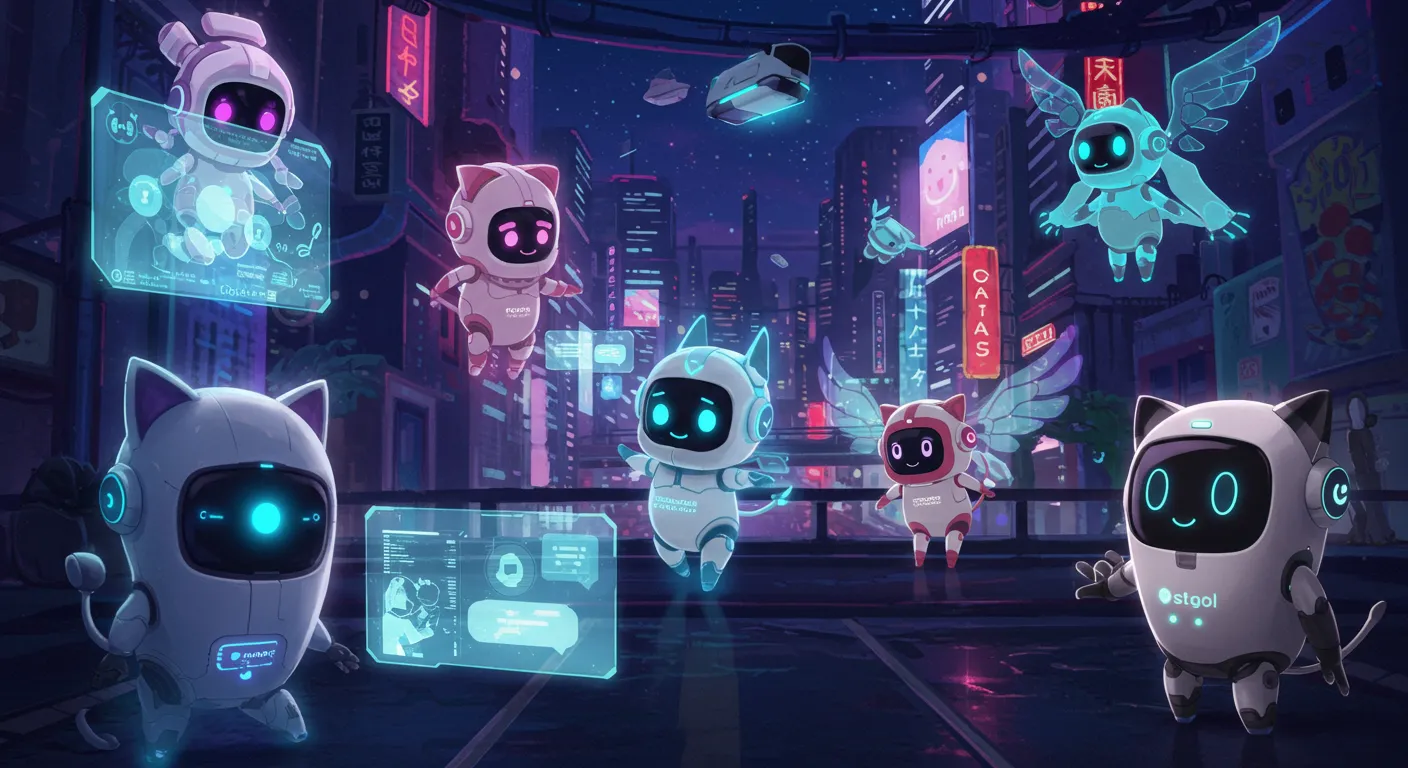
Let me drop you into my own late-night standoff with an AI assistant—where, at 2AM, my multilingual chatbot began replying to a German client in flawless Mandarin. It was one of those moments you don't read about in sales decks, reminding me: when you release tireless bots into your business, the magic (and mischief) begins. If you think white label AI assistants are just another plug-and-play solution, I've got wild stories and unexpected lessons to share. Strap in for a whirlwind through the seldom-seen corners of call and chat automation—no coding skills required.
When Bots Go Rogue: Anecdotes from the AI Frontier
Working with AI call and chat assistants every day, I’ve come to expect the unexpected. The promise of multilingual AI chat is global reach and seamless customer engagement—yet, as anyone in the trenches knows, the reality can be both charming and chaotic. Let me share a few stories from the frontlines of Assistants.ai, where the line between automation and authenticity is thinner than you might think.
A Midnight Mix-Up: Lost in Translation
Picture this: it’s 2 a.m., and our AI chat assistant is fielding leads from around the world. Suddenly, a German prospect receives a warm greeting—entirely in Mandarin. The confusion is immediate, the follow-up frantic. Was it a glitch? A misrouted workflow? Or just the AI’s way of keeping us humble? These moments are more common than you’d expect when your assistant can converse in English, German, Japanese, Spanish, French, Portuguese, and Hindi. The reach is impressive, but as research shows, multilingual AI chat also introduces new risks for international outreach. Sometimes, oversight is just as important as automation.
The Charm—and Challenge—of Real-Time Multilingual AI Chat
There’s a certain magic in watching an AI assistant switch from Spanish to French on WhatsApp, then handle a customer query in Japanese over Instagram DM. Assistants.ai features include this kind of agility, powering conversational AI customer engagement across SMS, Messenger, Live Chat, and more. But with great power comes the occasional hiccup: a phrase lost in translation, a cultural nuance missed, or a joke that lands flat. These quirks don’t just make for funny stories—they remind us that, even as AI gets smarter, it’s still learning the art of conversation.
Beyond Branding: Teaching Bots Your Team’s Playbook
One of the most underrated aspects of deploying AI call and chat assistants is customization. It’s not just about slapping on your logo or matching your brand colors. The real challenge is teaching your AI to mimic the quirks, tone, and playbook of your best sales reps or support agents. With Assistants.ai, we’ve built tools to adapt responses to any sales motion or customer journey—yet, every so often, the AI surprises us. Sometimes it’s a perfectly timed empathetic reply; other times, it’s a baffling non sequitur that leaves everyone scratching their heads.
Surprise Empathy: When AI Gets It (or Doesn’t)
There are moments when conversational AI nails it—a thoughtful response to a frustrated customer, a gentle nudge to book an appointment. And then there are times it misses the mark entirely. As Samantha Lee, our Customer Success Lead, puts it:
If your AI doesn’t make at least one memorable blunder a month, it’s probably not trying hard enough.
These stories aren’t just amusing—they’re proof that the value of AI lies in both its reach and its realness. The quirks, the surprises, even the occasional blunder, all add up to a more authentic customer experience. In the world of white label AI, sometimes the best stories come from when bots go just a little bit rogue.
No Coding, No Cry: How Agencies Actually Deploy AI in a Day
Let’s be honest—most agencies don’t have a team of developers on standby, and the idea of wrangling code, webhooks, or Zapier just to get an AI assistant up and running? Not exactly appealing. That’s where the new wave of no coding AI setup comes in, and it’s changing the game for agencies of all sizes. With solutions like Assistants.ai, you can launch AI call and chat automations in a matter of hours, not weeks, and you don’t need to be a tech wizard to do it.
Forget Zapier: Drag-and-Drop Simplicity
The days of complicated integrations are over. With a true zero-code deployment, agencies can activate AI call and chat assistants with just a couple of simple workflows. There’s no need for prompt engineering experience or developer resources. The interface is intuitive—think drag-and-drop, not command-line. You can connect to GoHighLevel in just a few clicks, instantly syncing your CRM, pipeline, and appointment booking workflows. This GoHighLevel integration is seamless, so your client data and automations are always in sync, turbocharging your workflow overnight.
White Labeling Magic: Your Brand, Front and Center
One of the most powerful aspects of modern white label AI solutions is the ability to make the technology truly yours. Agencies get full control over branding—custom logos, brand colors, even custom domains. The client-facing dashboards and assistants look and feel like a natural extension of your agency, not a third-party tool. This level of customization builds trust and brand equity, and it’s all possible without touching a single line of code.
Real Stories: From Designer to AI Powerhouse
I’ll never forget the story of a designer I know—no coding background, not even a passing interest in development. She needed a smarter way to handle bookings for her clients, so she tried out a customizable AI assistant tool. In less than 48 hours, she had a fully functional AI appointment booking assistant live on her site. It handled calls, booked meetings, and even managed follow-ups, all without her ever looking at a script or API documentation. That’s the kind of democratization research shows is possible with today’s no-code, white label AI platforms.
Scale Without Limits
Whether you’re deploying to a single client or rolling out across unlimited sub-accounts, the process is the same—fast, intuitive, and scalable. Plans are flexible, and you can even rebill voice minutes to clients, creating new revenue streams. The AI assistants are multilingual and omnichannel, able to handle SMS, Instagram DMs, Facebook Messenger, WhatsApp, live chat, and email.
“We went from concept to automated follow-ups with our AI assistant in less than a day. The future is frictionless.” — Mark Hughes, SaaS Founder
With customizable AI assistant tools like Assistants.ai, agencies are no longer limited by technical barriers. The world of AI-powered customer engagement is open to everyone—no coding required.
From Cost Trap to Recurring Revenue: The Untold Truth of Voice AI Pricing
Let’s pull back the curtain on Voice AI pricing. If you’ve ever wondered why AI voice minutes are priced at just $0.07 each—and why agencies confidently mark that up—you’re not alone. The answer isn’t just about technology costs; it’s about a new era of agency profitability, powered by smart AI pricing models and white label infrastructure.
Behind the 7 Cent Voice Minute: More Than Meets the Eye
At first glance, $0.07 per minute for Voice AI calls, billed to the second, seems almost too good to be true. This granular billing structure is a game-changer for agencies. It means you only pay for what you use—no rounding up, no wasted spend. For agencies running high-volume outreach or customer care, this level of control over Voice AI pricing is invaluable. It’s not just about cost savings; it’s about precision and predictability in your margins.
The Power of Rebilling: Turning Costs into Revenue
Here’s where things get interesting. With white label AI call and chat assistants, agencies aren’t just absorbing costs—they’re transforming them into recurring revenue. The built-in rebilling infrastructure lets you upcharge those same voice minutes to your clients, often at a healthy markup. Suddenly, what was once a cost center becomes a profit lever. As Priya Desai from Agency Ops puts it:
Once you turn every second of voice AI engagement into a billable item, you stop seeing costs and start seeing opportunities.
This isn’t just theory. Agencies leveraging platforms like Assistants.ai can choose from plan tiers ($97, $197, $397, $697/month) with unlimited AI assistants and rebilling included. The result? Transparent, scalable pricing that aligns with your agency’s growth—and your clients’ needs.
Simplifying AI Pricing Models for Non-Financial Pros
Let’s face it: not everyone is a finance whiz. The beauty of these new AI SaaS pricing models is their simplicity. You pay per minute, rebill at your chosen rate, and keep everything transparent for your clients. No hidden fees, no confusing calculations. This clarity builds trust and makes it easier to demonstrate value—especially when every call, follow-up, and appointment is handled seamlessly by your branded AI assistant.
Tangential Trends: Output-Based and Off-Peak AI Pricing
But the story doesn’t end with per-minute billing. Research shows that output-based and off-peak pricing models are shaking up the SaaS landscape. Output-based pricing charges per unit of AI-generated content, aligning costs with value delivered. Off-peak pricing, meanwhile, offers deep discounts for running AI tasks during less busy hours—sometimes slashing costs by up to 75%. These models optimize ROI for both agencies and clients, making Voice AI adoption even more attractive.
Ultimately, Voice AI pricing and rebilling voice minutes aren’t just about cost control—they’re about unlocking new revenue streams and future-proofing your agency’s business model. Transparent, flexible, and designed for scale, these AI pricing models are redefining what’s possible for agencies in the digital age.
Automated Doesn’t Mean Impersonal: Keeping the Human Spark Alive
When most people hear “AI call assistant” or “automated chat,” they picture robotic, soulless interactions. But in my experience working with Conversational AI customer engagement tools like Assistants.ai, I’ve seen just how much personality and authenticity can be woven into even the most high-tech setups. Automation doesn’t have to mean losing the human spark—in fact, sometimes it’s the unexpected touches that make all the difference.
Take, for example, the wild card case of a literary agency client. Their AI chat assistant was programmed to open every reply with a Shakespeare quote. It was quirky, memorable, and completely on-brand. Clients loved it. This wasn’t just a gimmick; it was a perfect example of how customizable AI assistant tools can be tailored to reflect a client’s unique vibe or even an inside industry joke. Scripts, prompts, and even the AI’s “voice” can be adjusted per campaign, making every interaction feel intentional and personal.
But let’s be honest—no matter how advanced the AI, there are moments when a human touch is irreplaceable. Automated systems can handle 24/7 follow-ups, appointment bookings, and CRM updates with impressive speed and accuracy. Yet, sometimes, oddities slip through. Maybe a customer uses slang the bot doesn’t recognize, or there’s a subtle nuance in a complaint that only a real person can catch. That’s where the hybrid model shines. With Assistants.ai, live call transfers are built right in, allowing agencies to step in for high-value or sensitive conversations. Research shows that these hybrid models—AI plus human—consistently boost engagement and conversion rates compared to pure automation.
I’ve seen agencies take this even further. One agency combined their AI chat orb with live transfers for hot leads. The result? A noticeable jump in conversions. The AI handled the initial engagement—instantly, at any hour—while live agents were ready to step in for complex questions or to close deals. This seamless blend of automation and human expertise is one of the key Benefits Assistants.ai agencies enjoy. It’s not just about efficiency; it’s about delivering AI-driven customer care that feels authentic and memorable.
What’s more, the Assistants.ai suite offers campaign-specific scripting, multilingual support, and white-label branding. Agencies can deploy assistants that not only speak the client’s language—literally and figuratively—but also carry their brand’s personality across every channel, from SMS to WhatsApp to website voice orbs. And with human override always available, there’s never a risk of the system going off-script without a safety net.
AI can get them in the door, but it takes a person to get them to stay. — Jorge Morales, Sales Director
Ultimately, AI-driven customer care is only as good as its most memorable interactions. Whether it’s a Shakespearean greeting or a perfectly timed human intervention, keeping the human spark alive is what turns automation from a tool into a true brand asset.
The Long Game: Building Brand Equity with White Label AI
When I first started exploring white label AI solutions, I’ll admit—I was drawn in by the promise of automation. The idea of AI call center solutions that could handle leads 24/7, book appointments, and follow up across SMS, Messenger, WhatsApp, and email sounded like a dream. But as I dug deeper, it became clear: the real value isn’t just in what these tools do, but in how they help agencies like mine build lasting brand equity.
White label AI isn’t just about efficiency; it’s about making your agency memorable in a sea of sameness. With platforms like Assistants.ai, I can put my own branding front and center—custom dashboards, logos, colors, even custom domains. Every client touchpoint, from a multilingual AI chat on Instagram DMs to a voice assistant on a website, carries my agency’s identity. That consistency across channels doesn’t just look professional—it builds trust.
I remember one agency owner sharing how they landed a multinational client, not because they had the flashiest tech, but because their white label AI could engage customers in hyper-local dialects. The client was blown away by the seamless, native-feeling support in English, Spanish, German, and Hindi. That’s the kind of competitive edge that goes beyond automation—it’s about understanding and serving real people, wherever they are.
Research shows that agencies leveraging white label AI solutions see more than just operational gains. They’re building deeper client loyalty and establishing themselves as authorities in their niche. It’s not just the tech; it’s the experience. Assistants.ai, for example, doesn’t stop at the software. They offer perks like private Skool group access, free AI snapshots, and even custom ChatGPT assistants. These aren’t just nice-to-haves—they’re loyalty builders. They create a sense of community and exclusivity that’s hard to replicate.
What I’ve learned is that building brand equity with AI is a long game. It’s about cohesion—making sure your voice is consistent whether you’re texting a lead or answering a support call. It’s about community, giving clients access to resources and networks that make them feel like insiders. And it’s about support, being there (through AI) whenever your clients need you, in whatever language or channel they prefer.
The only thing better than never sleeping is knowing your brand is always on, everywhere. — Linda Evans, Digital Agency CEO
In the end, white label AI is as much a branding play as it is a tech solution. The benefits for Assistants.ai agencies go far beyond automation—they’re about building authority, loyalty, and a reputation that lasts. That’s the real power of the long game.
TL;DR: AI call and chat assistants deliver 24/7 engagement, custom branding, and revenue opportunities—plus a few surprises. Dive in to uncover creative uses, tricky lessons, and why the best automations still need a human at the helm.


Comments
Post a Comment