From Endless Voicemails to Effortless Conversations: My Unfiltered Journey with White Label AI Assistants
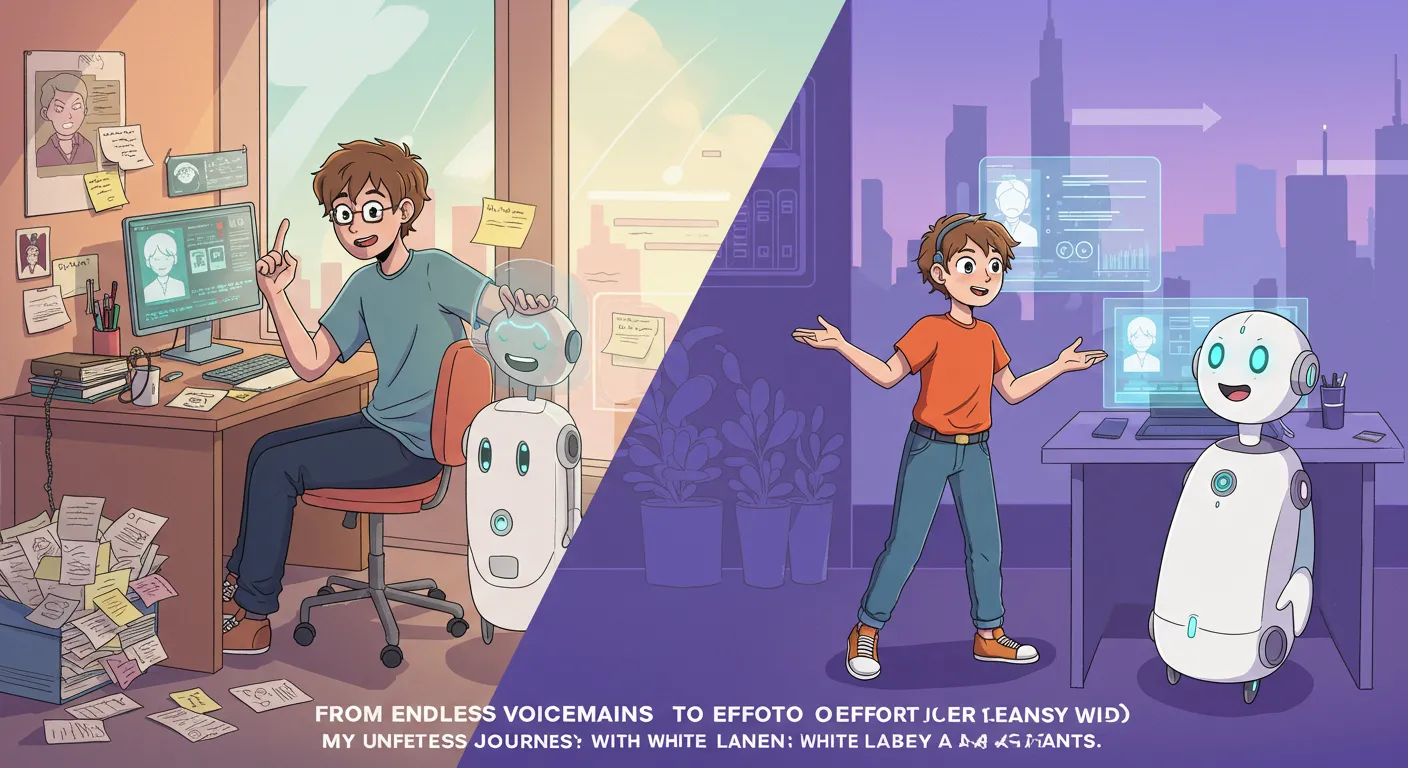
Let me spill a secret: I absolutely dreaded picking up the phone for repetitive client calls. Enter white label AI assistants—a game-changer that turned my chaotic communication pipeline into a frictionless, automated system. But it wasn't all plug-and-play magic. In this post, I’m laying out the honest wins, stumbles, and weird surprises I hit along the way, with a look inside how these AI platforms are really reshaping the agency landscape.
Why I Ditched Manual Calls: A Little Chaos, a Lot of Coffee, and ‘The Orb’ Moment
If you’ve ever managed a digital agency or SaaS business, you know the drill: endless voicemails, missed leads, and the kind of after-hours chaos that only a steady stream of coffee can keep at bay. For years, I clung to manual calling and follow-ups, convinced that a personal touch was the only way to build trust. But as my business grew, so did the cracks in my process. Leads slipped through the cracks, appointments overlapped, and my voicemail became a graveyard for missed opportunities. Burnout wasn’t just a buzzword—it was my daily reality.
The turning point? It came in the form of something called The ORB—a voice AI agent that promised to transform the way I handled calls. I’ll admit, I was skeptical. Could an AI Call Assistant really handle conversations with the same nuance and empathy as a human? The first time I watched The ORB in action, I felt a mix of fascination and relief. It picked up a real inbound call, responded in natural language, and even booked an appointment—all before I could finish my coffee. It was bizarrely satisfying, almost surreal, to see Conversational AI work faster and more accurately than I ever could.
But the real revelation wasn’t just about speed. It was about availability. My clients didn’t want to wait for a callback or listen to my midnight voicemail greeting. They wanted instant engagement—at any hour, in any language. That’s where the magic of Multilingual AI Chat truly hit home. With support for English, Spanish, German, French, Chinese, Hindi, and more, The ORB didn’t just answer calls; it made my agency accessible to a global audience. Research shows that AI call center solutions not only boost automation but also dramatically improve customer engagement for agencies. The ability to engage leads instantly, 24/7, is no longer a luxury—it’s the new standard.
I’ll be honest: deploying AI for both voice and chat felt a bit odd at first. There’s a strange joy in watching an AI agent handle everything from appointment booking to CRM updates, all without a single line of code or complex workflow. Yet, the skepticism lingered—could this really replace the human touch? Over time, the results spoke for themselves. Missed leads became a thing of the past. Scheduling was seamless. And the multilingual capabilities meant I could serve clients across continents, not just time zones.
“It’s no longer about being always on—it’s about being instantly there, every time.” — Sarah Li, Digital Agency Lead
With pre-built AI call and chat workflows, white-label branding, and effortless integration with GoHighLevel, the chaos of manual calls faded into the background. The ORB wasn’t just a tool—it was a turning point in how I approached client engagement and agency growth.
Wearing My Brand Proudly: How White Label AI Brought Identity (and Trust) Back to Automation
When I first started using White Label AI Solutions for my agency, I’ll admit—my motivation was simple. I wanted my clients to see my brand, not a generic tech provider, every time they interacted with our new AI Call Center Solutions or AI Voice Assistants. But what happened next surprised me: the impact went far beyond just aesthetics.
Branding That Actually Gets Noticed
The first time I snuck my agency’s logo and colors onto the AI dashboard, I didn’t expect much. Maybe a subtle nod from a detail-oriented client. Instead, I got emails—actual thank-yous—from clients who noticed the change immediately. They mentioned how reassuring it was to see our familiar branding on their call summaries, emails, and chat interfaces. It felt less like they were talking to a robot, and more like they were still in our care.
Trust: The Real Value of White Label AI
Research shows that clients are more likely to trust and stay loyal to a brand they recognize. When our AI Voice Assistants started reaching out—whether via SMS, WhatsApp, or even outbound calls—our name and colors were front and center. No more confusion about who was contacting them. No more “who is this tech company?” moments. The trust boost was real, and it translated into longer client relationships.
Building trust means showing clients your name is behind the tech—not just another faceless algorithm. — Jordan Rivera, SaaS Consultant
White Label Isn’t Just for Looks—It’s About Ownership
It’s easy to think white labeling is just a vanity play. In reality, it’s about ownership. With custom domains, logos, and theming, my agency’s identity is woven into every client touchpoint. That sense of ownership makes our AI Call Center Solutions feel like a true extension of our team, not just a bolt-on service. It’s a subtle shift, but it’s made all the difference in how clients perceive our value.
Rebilling: Turning Support Into a Revenue Stream
Here’s where things got interesting. With voice minutes billed at just 7 cents per minute (and the ability to markup for clients), I realized our support automation could actually generate revenue. Instead of being a cost center, our AI-powered support became a profit point. The built-in rebilling model made it easy to track usage and invoice clients transparently—no hidden fees, just a fair markup for premium service.
- White label dashboards and custom domains are included in every package.
- Rebilling voice minutes is seamless—clients pay for what they use, and agencies keep the margin.
- Clients perceive more care and professionalism when the AI feels like “ours,” not “theirs.”
In the end, white label AI isn’t just about looking good. It’s about building trust, deepening relationships, and unlocking new revenue streams—one branded conversation at a time.
Unpacking Features: Where Gimmicks End and Real AI Efficiency Begins
When I first heard about the latest wave of AI Features for agencies, I’ll admit—I was skeptical. There’s no shortage of Conversational AI Tools promising to revolutionize workflows, but too often, they’re all flash and no substance. That changed the moment I tried a white label AI assistant built for GoHighLevel. Here’s what actually made a difference for my team—and what didn’t.
Onboarding Without Overwhelm: No Coding, No Prompt Engineering
The first thing that struck me was the simplicity. Connecting the AI Chat Assistant to GoHighLevel took just a few clicks—no coding, no Zapier, no webhooks. Even better, there was no need for prompt engineering. The system writes its own prompts for any niche with a single line of instruction. For a team already juggling a dozen platforms, this was a breath of fresh air. We could focus on client work, not deciphering technical documentation.
Automated Appointment Booking and CRM Updates: The Real Game Changers
Where the AI Appointment Booking feature really shined was in its seamless automation. The assistant handled recurring tasks—booking appointments, updating contact details, following up with leads—without missing a beat. The moment I saw it transfer a live call to a human agent, right when the conversation needed a personal touch, I realized this tool “got” agency pain points. It wasn’t just about automating for the sake of it; it was about making our workflow genuinely more efficient.
Multi-Channel, Multilingual Outreach: The Oddball Talent That Delivers
One of the more surprising AI Features was the assistant’s ability to send messages across multiple channels—SMS, Instagram DMs, Facebook Messenger, WhatsApp, email, and even live chat—sometimes all at once. And it didn’t stop at English. With support for Spanish, German, French, Chinese, Hindi, Japanese, and Portuguese, we suddenly had a Multilingual AI Chat assistant that could connect with leads in their preferred language. Research shows that multichannel AI chat assistants can automate outreach across platforms and languages, which is a must-have for agencies serving diverse markets.
Customizable AI Workflows: Adaptable, But Not All Features Are Equal
Customization is where things get interesting. The platform let us tailor workflows to fit our agency’s unique processes—no rigid templates, just flexible options. But here’s the catch: not every feature moved the needle. Some sounded impressive on paper but didn’t add real value to our daily operations. For example, I ended up disabling a few “bonus” integrations that cluttered the dashboard more than they helped. As Priya Mehrotra, Automation Architect, puts it:
Efficiency isn’t about more features—it’s about the right features in your workflow.
In the end, the features that stuck were the ones that made our team’s lives easier and our client experience smoother. Instant integration, automated appointment booking, CRM updates, and true multichannel, multilingual outreach—those are the Conversational AI Tools that delivered on their promise.
The Numbers Game: What Does AI Really Cost, and Where’s the ROI?
Let’s talk numbers—because when it comes to AI Pricing, the details matter. I’ll admit, when I first looked at the cost breakdown for white label AI call and chat assistants, I braced myself for sticker shock. But the reality? It’s more nuanced, and honestly, more manageable than I expected.
Understanding AI Voice Pricing: The Real Cost of Every Conversation
Voice AI calls are billed at 7 cents per minute, and they’re charged by the second. On paper, that sounds reasonable. For a small agency or solo operator, it’s a fair entry point. But if you’re running a busy team, those minutes can add up fast. I remember my first month—thinking I’d barely scratch the surface, only to see usage spike as clients leaned into 24/7 support. Still, compared to hiring and training human agents, the math was in my favor.
AI Pricing Models: Subscription, Usage, and the Hybrid Approach
Most AI Call Center Solutions use a mix of subscription-based and usage-based pricing models. With Assistants.ai, agency plans range from $97/month (Solo) up to $697/month (Unlimited). Each tier unlocks unlimited AI assistants, and the only real variable is how many sub-accounts you need. For me, the break-even point came way sooner than I’d guessed. The moment I rebilled my first client for AI support—at a markup—the platform was paying for itself.
- Solo Plan: $97/month
- Starter: $197/month
- Growth: $397/month
- Unlimited: $697/month
Research shows that integration and maintenance costs can impact your total spend, but the efficiency gains—less admin, no coding, no complex workflows—offset those expenses quickly. Plus, with built-in rebilling, you can pass on costs (and even profit) as you scale.
Hidden Costs? Or Hidden Savings?
One of my favorite “hidden” perks: you can bring your own OpenAI API key or Twilio number. For the technically inclined, this is a tiny delight. It gives you more control over your AI Chatbot Costs and lets you optimize for your own usage patterns. No need for extra integrations or custom coding—everything just works out of the box.
And let’s not forget the admin savings. No more chasing voicemails, no more manual follow-ups. The AI handles appointment booking, CRM updates, and even multilingual conversations across SMS, social DMs, and email. That’s efficiency you can measure.
The hidden ROI? Every hour our team didn’t spend on the phone was another hour for growth projects. — Marcus Lee, Customer Experience Manager
My personal wild card? The first client who paid for premium support—never realizing it was an AI agent on the other end. That’s when I knew: the ROI isn’t just about dollars and cents. It’s about time, scale, and the freedom to focus on what matters most.
Unexpected Lessons (and a Dash of Humor): Where AI Falls Short and Where It Surprises
When I first introduced white label AI Call Assistants and AI Chat Assistants into my agency’s daily workflow, I expected efficiency. What I didn’t expect were the moments of genuine surprise—and, yes, the occasional laugh-out-loud blunder. AI Solutions promise to supercharge operations, but as I quickly learned, even the best Conversational AI Tools have their quirks.
Take, for example, the infamous “dentist incident.” I asked my AI assistant to schedule a follow-up call with a client named Dennis. The result? A confirmed appointment with my actual dentist. It was a harmless mix-up, but it highlighted something important: context and nuance can still trip up even the most advanced AI. As Emily Costa, a fellow agency owner, put it,
AI is only as smart as the human behind the curtain—and sometimes, not even close.
Despite these occasional hiccups, the benefits of AI Solutions in agency life are hard to ignore. Handing over routine follow-ups to a machine felt risky at first. Would clients feel neglected? Would the responses sound robotic? To my surprise, not only did clients appreciate the lightning-fast replies, but customer satisfaction scores actually improved. Research shows that ultrafast follow-up—something AI Call Assistants excel at—can make all the difference in today’s on-demand world.
Then there’s the sheer stamina of these digital agents. No sleep, no lunch breaks, no burnout. Watching AI Chat Assistants qualify leads at 2 a.m. while I was fast asleep was both a relief and, admittedly, a little humbling. Human teams simply can’t compete with that kind of round-the-clock consistency. And with features like multilingual support, instant CRM updates, and seamless integration with GoHighLevel, these tools are built for scale and adaptability.
Of course, the journey hasn’t been without its philosophical moments. As AI Solutions grow more sophisticated, I sometimes wonder: could AI voice agents ever replace me? Or, more likely, will they free me up to focus on the truly human aspects of agency work—strategy, creativity, and relationship-building? The reality is, AI Call and Chat Assistants are best at handling the grind, leaving agency pros to become strategic advisors and problem-solvers.
In the end, embracing Conversational AI Tools has been less about replacing people and more about amplifying what we do best. The quirks and surprises are part of the package, but so are the efficiency gains and happier clients. If you’re considering AI for your agency, expect a few unexpected lessons—and don’t be afraid to laugh along the way.
TL;DR: If you’re tired of bottlenecked calls and want smarter, customizable conversations that run on autopilot, white label AI call and chat assistants integrated with GoHighLevel are more accessible—and more effective—than you might think. Here’s the full, no-filter scoop.


Comments
Post a Comment