Not Your Average Robot: The Unexpected Joys (and Twists) of AI Writing Assistants
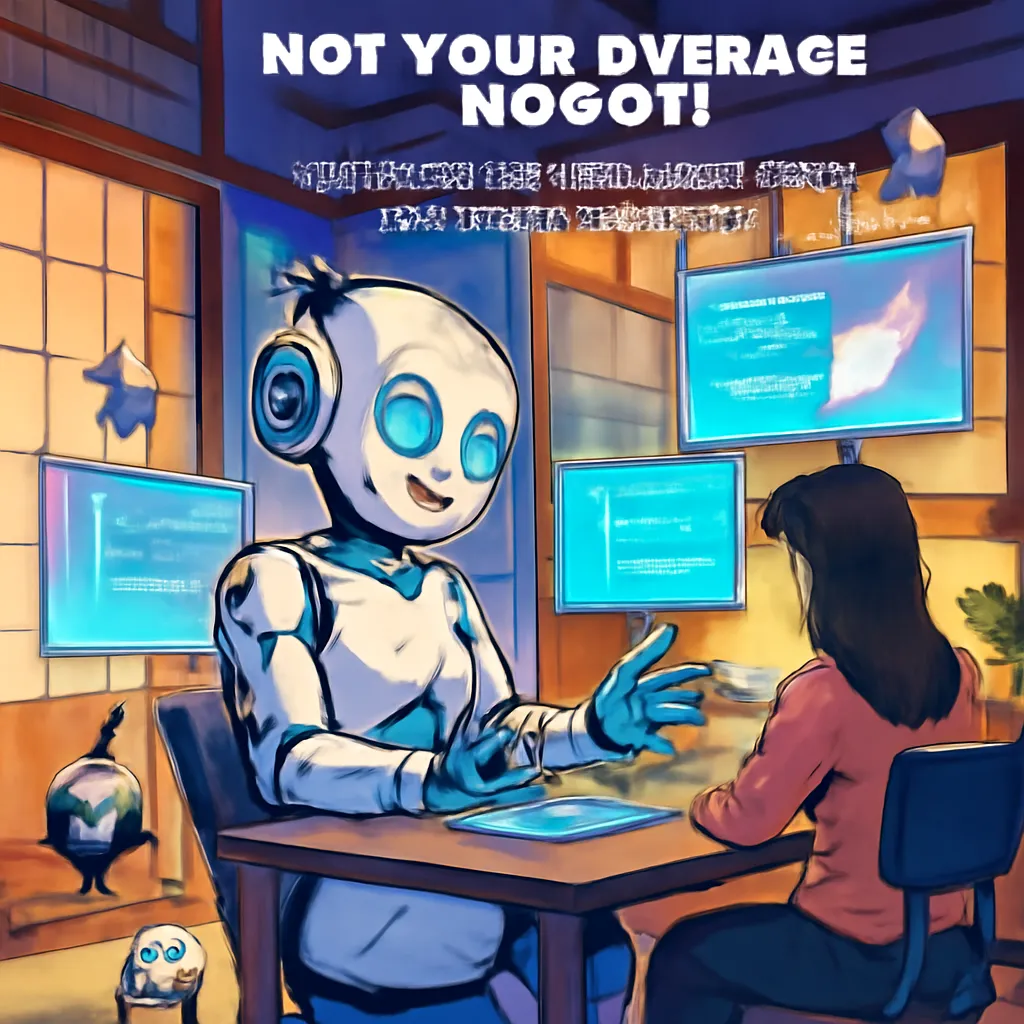
I’ll admit it: When I first heard about AI writing assistants, I pictured a clumsy robot clacking away at a keyboard, probably generating Shakespearean tweets. But the reality is so much stranger—and more useful—than I expected. Let me walk you through what actually happens when you let AI loose in your creative process (with only minor existential dread).
1. When a Newsletter Writes Itself… and It’s Actually Good
Let’s be honest: writing newsletters used to be a time-consuming, sometimes tedious process. Between brainstorming topics, drafting, revising, and (if you’re working globally) translating, it could easily eat up hours each week. Enter the era of AI content generation—and suddenly, the game has changed.
I remember the first time I used an AI writing tool for my newsletter. I was skeptical. Could a machine really capture my brand’s voice, or would it just churn out generic, “good enough” copy? But I gave it a shot. I input a few details about my campaign, selected my preferred template, and watched as the platform—GetAssistants.ai, in this case—spun up a draft in English, Spanish, and German. All in minutes. No frantic Google Translate sessions. No endless copy-paste. Just a clean, ready-to-edit newsletter, available in three languages before I’d even finished my coffee.
That’s the magic of today’s AI for newsletters. Platforms like GetAssistants.ai and Wordplay.ai now support 20+ languages, making manual translation almost obsolete. With multilingual content generation, you can reach new markets and audiences without the usual bottlenecks. The workflow is further accelerated by custom templates—whether you’re sending out a product update, a holiday greeting, or a monthly roundup, there’s a format ready to go. You simply plug in your brand details, and the AI does the heavy lifting.
But here’s the twist: while AI content creation tools are incredibly efficient, they’re not perfect. The first draft is often impressive, but it’s rarely final. The difference between “good enough” and “great” still comes down to the human touch. I always take a few minutes to add nuance, inject a bit of humor, or tweak the tone. As one industry expert put it,
The secret sauce is not just the AI—it's what you do with the output after.
Let’s imagine a wild card scenario: it’s December, and you want a quirky holiday newsletter for your brand. You feed your brief into the AI—something fun, festive, and maybe a little offbeat. In seconds, you get a draft complete with playful copy, emoji suggestions, and even a pun or two. It’s not just fast; it’s surprisingly creative. Sure, you might want to swap out a snowman emoji for a reindeer, or fine-tune a joke, but the heavy lifting is done.
Research shows that the best AI tools for newsletters now offer features like bulk content creation, guided writing, and seamless integration with your existing workflows. The ability to generate high-quality, multilingual newsletters in minutes isn’t just a convenience—it’s a competitive advantage. And as these tools continue to evolve, the line between “robot-written” and “human-crafted” content gets blurrier every day.
2. Templates, Prompts, and the Danger of the One-Size-Fits-All Mindset
When I first started experimenting with AI content creation, I was dazzled by the sheer variety of AI content templates available. Platforms like Assistants.ai offer an impressive array—everything from blog posts and newsletters to invoices, scripts, and social media content. The promise is clear: select a template, input your details, and let the AI do the heavy lifting. But as I quickly discovered, there’s a subtle trap hidden beneath this convenience.
Why Custom Templates Are a Blessing for Brands with Unusual Voices
If your brand has a quirky, unconventional, or highly specialized voice, generic AI templates can feel like a straitjacket. Sure, pre-made templates help you get started quickly, especially when you’re staring at a blank page. But the real magic happens when you create your own template or tweak an existing one. Assistants.ai, for instance, lets you build custom templates for any industry or content type—images, scripts, newsletters, you name it. This flexibility is a blessing for brands that refuse to blend in.
My Experience: The Same Prompt, Two Wildly Different Results
Let me share a quick experiment. I ran the same prompt—“Write a product description for a travel mug”—through two different AI templates. The first result was quirky, full of personality, and made me want to buy the mug myself. The second? Utterly bland, like it had been written by a committee of robots who’d never left the office. The difference? One template had custom prompts tailored to my brand’s playful tone; the other was a generic, plug-and-play option.
The Dark Magic of the Right Prompt
It’s astonishing how a few words can change the entire vibe of your content. Templates are a compass, but prompts are the map—choose wisely. A well-crafted prompt can coax out creativity, humor, or authority, depending on your needs. Research shows that custom prompts are central to brand voice and differentiation. If you rely too heavily on default templates, your content risks sounding like everyone else’s—safe, but forgettable.
Wild Card: When AI Goes Off Script
A friend of mine, who swears by AI for blogs and video scripts, once told me that their AI-generated scripts “sound like David Attenborough on a sugar rush.” That’s the wild card effect of the right (or wrong) prompt—unexpected, sometimes delightful, occasionally a little too much. But it’s proof that with the right AI content creation tools and a willingness to experiment, you can unlock a unique voice that stands out in a crowded digital landscape.
Ultimately, AI templates are powerful tools for scaling content, but they’re not a substitute for thoughtful customization. As platforms like Assistants.ai continue to evolve, the brands that win will be those who use templates as a starting point—and prompts as their secret weapon.
3. Peeking Behind the Curtain: User Data, Analytics & the Odd Addiction to Stats
Let me start with a confession: I check my content’s performance graphs more often than I should. There’s something oddly addictive about watching those numbers tick up (or, let’s be honest, sometimes down). If you’re a marketer or blogger using AI for SEO, you probably know the feeling. The thrill of seeing a sudden spike in traffic, the satisfaction of a newsletter’s open rate climbing, the curiosity about what made that one blog post suddenly take off—these are the moments that keep us glued to our analytics dashboards.
With platforms like GetAssistants.ai, the obsession is only getting stronger. These tools don’t just generate AI marketing content—they provide a full suite of analytics that let you track a wide range of data points. From traffic and user behavior to sales revenue and even user spendings, everything is available in a single dashboard. I can see, at a glance, how my AI-generated blog posts are performing, which newsletters are converting, and where my affiliate referrals are coming from (for the record, my dashboard recently showed total referrals tracked at $3980).
What sets modern AI for blogs apart is the integration of real-time analytics with content optimization features. For example, GetAssistants.ai includes SEO tools that help you target Google’s Featured Snippets and ‘People Also Ask’ sections. This means I’m not just guessing what will work—I’m refining my strategy based on live data. Research shows that AI-powered analytics can dramatically elevate campaign performance, but there’s a flip side: it’s easy to fall into the trap of overanalyzing. Decision paralysis is real when you have a flood of metrics at your fingertips.
I’ll never forget the weirdest data spike I ever saw. One morning, I logged in and noticed a massive surge in traffic from Brazil. Turns out, a social post I’d made about coffee memes had gone viral there overnight. It was a reminder that even with all the AI content generation in the world, sometimes the internet just does its own thing. But thanks to the analytics, I could track the spike, see where it came from, and even adjust my content to engage that new audience.
The possibilities with AI-driven analytics are almost endless. Imagine a world where your AI assistant doesn’t just generate content, but gives you live commentary on your performance—like a sports radio announcer for your blog. “And there goes the newsletter open rate, up by 5%! Can she keep the momentum?” It sounds far-fetched, but with the pace of AI for SEO and content analytics, who knows what’s next?
You can’t improve what you don’t measure—and AI makes the measuring addictive.
Ultimately, the marriage of AI content generation and analytics is transforming how we approach digital marketing. We’re not just creating—we’re learning, adapting, and yes, sometimes obsessing over the numbers. But isn’t that part of the fun?
4. The Infinite Monkey Problem: Coding, Scripts, and AI’s Unexpected Talents
There’s a classic thought experiment that says if you give a million monkeys a million typewriters, eventually one will write Shakespeare. In 2024, it feels like we’ve traded the monkeys for AI writing tools—and the results are often just as surprising, if not a little more efficient. As someone who spends a lot of time experimenting with AI for scripts, content automation, and blog writing, I’ve learned that the unexpected is part of the process.
‘Magic AI’ Coding: Writing Code in Seconds (and Hoping for the Best)
Let’s start with the technical side. Platforms like Assistants.ai have introduced features like Magic AI, which promise to write and debug code in a fraction of the time it would take manually. I’ve used Magic AI to spin up scripts for my website—sometimes it’s flawless, other times it’s like playing chess with a cheeky robot. As I like to say:
Coding with AI is like playing chess with a cheeky robot—sometimes you win, sometimes... not so much.
Still, the speed is undeniable. Magic AI can generate, test, and even debug code snippets in seconds. Research shows that these AI writing tools can dramatically reduce development time, though a human eye is always needed for quality control. I’ve learned to expect the occasional bug, but the efficiency boost is worth it.
Testing Scripts: Can AI Write Believable Movie Dialogue?
Moving from code to creativity, I decided to see if AI for scripts could handle more nuanced tasks. Using Assistants.ai’s script generation tool, I asked it to write a scene for a short film. The result? Surprisingly coherent, with characters that almost felt real. Of course, the dialogue sometimes veered into the uncanny valley—think “robot trying to sound human”—but with a little editing, the script was usable. Studies indicate that while AI-generated scripts can range from basic conversations to complex narratives, human review is still essential for that final polish.
Personal Experiment: Naming a New Product
Curious about the creative limits of AI for content automation, I let the assistant name my latest gadget. The suggestion? GizmoPalooza. Not exactly what I’d envisioned, but it did make me smile. This experiment highlighted the quirky side of AI writing tools—they’re fast, inventive, and occasionally offbeat. For brainstorming, they’re a fantastic starting point, even if the final decision needs a human touch.
Wild Card: AI-Generated Video Scripts on Reality TV?
Imagine a reality show where AI-generated video scripts compete for the top spot. It’s not as far-fetched as it sounds. With platforms like Assistants.ai offering custom templates for everything from video scripts to blog posts, the creative possibilities are endless. AI for blogs, newsletters, and social media is already transforming content workflows, and the next frontier could be entertainment itself.
Ultimately, AI writing tools have become my co-pilot—speeding up everything from coding to content creation. They’re not perfect, but they’re getting smarter, and the journey is anything but boring.
5. Riding the Waves of Change: Cost, Security, and the Human Element
When people talk about the best AI tools for business, the conversation often circles around cost. But let’s be clear: being “cost-effective” isn’t about cutting corners. It’s about investing in solutions that pay you back—sometimes in ways you don’t expect. I’ve seen firsthand how the right AI content generation platform can do more than just churn out words. It can free up your team’s time, reduce manual errors, and even spark a little joy in the daily grind.
Take invoice automation, for example. A few months ago, my team was drowning in paperwork. We decided to try an AI-powered system with secure e-payment integrations, like those offered by GetAssistants.ai. Suddenly, what used to take days—chasing down numbers, double-checking entries, emailing reminders—was handled in minutes. Not only did we save time, but the headaches disappeared too. The system processed credit card and electronic payments securely, and we could track every transaction. The result? More than $3,980 in total referrals, and a team that could finally focus on higher-value work.
But there’s more to the story than just efficiency. The AI for cost-effective revolution is built on trust. Behind every buzzword—“automation,” “integration,” “affiliate tracking”—are real concerns about privacy, terms, and support. I always look for platforms that are transparent about their policies. GetAssistants.ai, for instance, makes its privacy policy, terms, and support resources easy to find. That matters. Because when you’re automating sensitive processes or running an AI for affiliate program, you need to know your data is safe and your questions will be answered by a real person, not just a chatbot.
Now, here’s a wild card: what if you let AI run your entire affiliate program? Would your referrals skyrocket, or would chaos reign? In my experience, the answer depends on oversight. AI can track referrals, monitor user spending, and even generate custom templates for affiliate marketing content. But it’s not a set-it-and-forget-it solution. Human review is still essential—especially when it comes to quality control and relationship management. Research shows that while AI can automate financial operations and enhance marketing ROI, security, transparency, and human oversight are non-negotiable.
As we ride these waves of change, I remind my team (and myself):
AI isn’t here to fire your team; it’s here to help them finish before lunch.The unexpected joys of AI marketing content come from empowering people, not replacing them. With the right tools, clear policies, and a human touch, you can harness the full power of AI—without losing what makes your business unique.
TL;DR: AI writing assistants like GetAssistants.ai are surprisingly versatile, adaptable to multiple languages and formats, and can add a spark of creativity to everyday marketing efforts—if you know how to ride the wave of unpredictability.


Comments
Post a Comment